

Previously published · 4 min read
Beyond Bouncing Back
How Creativity Transforms Resilience
By Dr Catherine Gomersall
What if resilience isn’t about returning to who you were before? What if creativity helps us become someone new?
We all talk about being resilient from time to time, and often the term gets dulled down to buzzword status.
Bounce back. Stay strong. Stick it out.
But real resilience isn’t just enduring passively. It is about creating actively. It’s the ability to stop and create something new with the pieces still at hand.
As an artist, I spent the past decade exploring what being resilient truly meant. Not just in catchy inspirational quotes, but in the messy reality of trauma, recovery, and the challenge of living a creative life in a world that isn’t always hospitable to creative people.
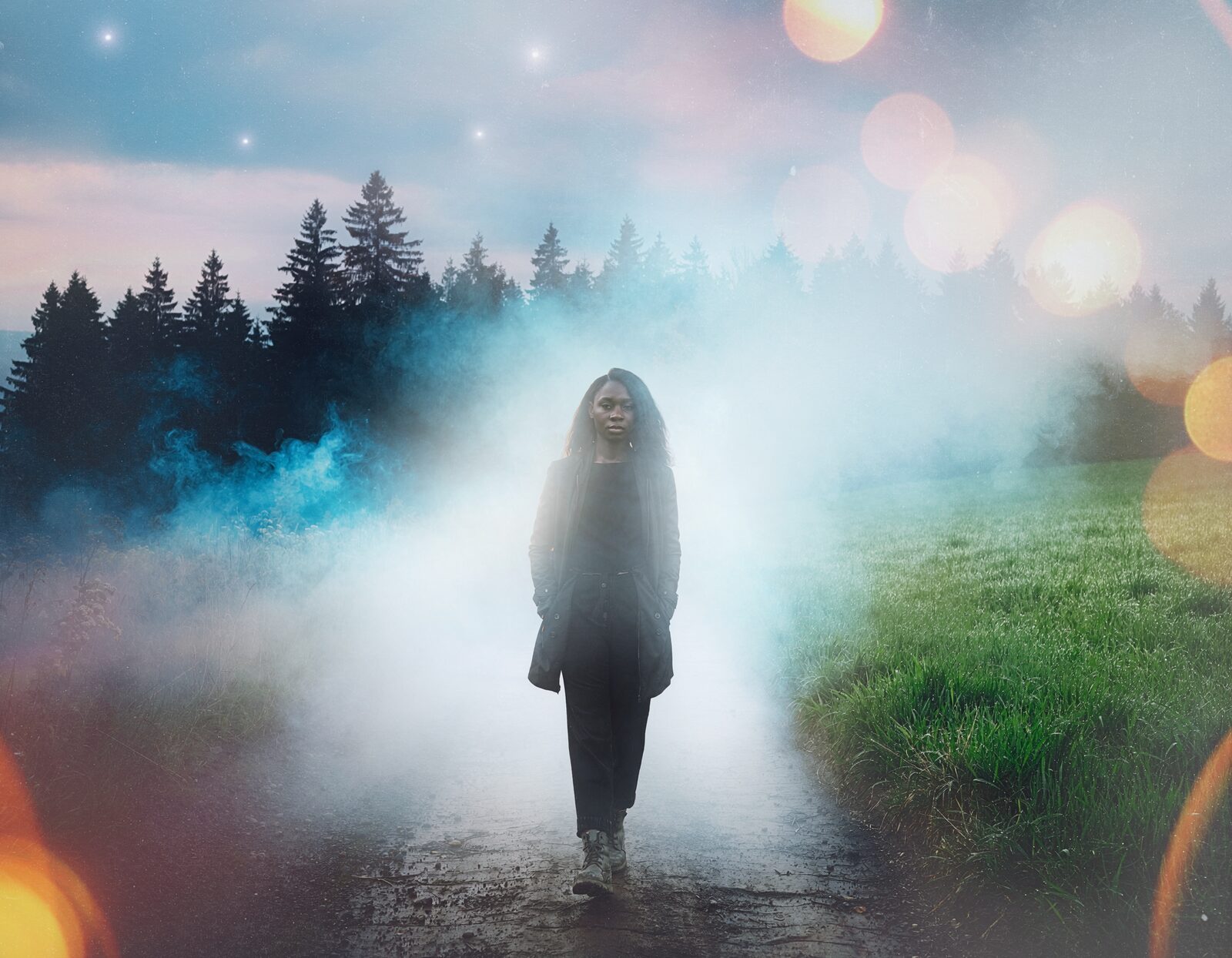
For me, resilience became entangled with self-portraiture. Every time I pointed a camera at my own reflection, the narrative shifted from erasure and being pulled apart to self-empowerment and reclamation.
Each self-portrait was an act of taking back control of my story.
Every project became a way of saying:
I am still here, and I write my own visibility into existence.
More Than “Bouncing Back”
In wellness circles, resilience is often painted as a return to equilibrium — the ability to bounce back after adversity.
But what if there is no “back” to bounce to?
For many of us, the experiences that demand resilience — death, illness, trauma, burnout — fundamentally alter who we are.
The goal isn’t to go back.
The goal is invention.
That’s where creativity comes in.
A drawing, a song, a new business venture, or a fresh way of seeing your own body — these aren’t simply products of healing. They are strategies for survival. They are ways of making meaning when the old systems of understanding no longer hold true.
The Tension Between Resilience and Justice
In my special release artist book, Magic Muse V.1: Taking the Path of Most Resilience, I explore how resilience both hurts and heals.
It can serve as powerful self-empowerment, but it can also become a burden — a societal expectation that we keep pushing forward even when systems fail us.
For artists, and for anyone working in wellness, this tension is real.
We are urged to tend to ourselves, manage our emotions, and take responsibility for our wellbeing. Meanwhile, the structures that create exploitation and injustice often go unchallenged.
This is why I believe creativity must be central to resilience.
It is not enough to simply endure.
We must also envision and create alternatives.
We must imagine what could be remade.
Practice, Not Disposition
Resilience isn’t something you either have or don’t have.
It isn’t a fixed trait.
It is a practice.
And like any practice, it can be cultivated.
In my work, I’ve developed what I call the Creative Integration Method — a way of blending design thinking, systems thinking, and intuition to create pathways forward.
But you don’t need a formal framework.
All you need is an open mind and a willingness to experiment.
A Resilience Exercise in Three Frames
Here’s a simple practice anyone can try, whether you consider yourself an artist or not.
All it requires is the camera on your phone.
Frame the Past
Take a photograph of an object, place, or symbol that represents a challenge you’ve moved through.
Don’t overthink it. Let your intuition guide you.
Frame the Present
Capture something that grounds you in who and where you are right now.
Perhaps it’s your morning coffee, a corner of your home, or the view from your window.
Frame the Future
Photograph something that feels like invitation or possibility.
A sunrise.
An open door.
New growth on a plant.
An unfinished project waiting for your attention.
Now look at these three images together.
Notice how they tell a story — not of being trapped in a single difficult moment, but of movement, context, and possibility.
You’ve just created a visual reminder that you are not confined to any one frame of experience.
Why This Matters Now
We are living through multiple overlapping crises — environmental, economic, and social.
The self-help world has never been louder about self-care, but it has also become increasingly commodified.
Real resilience cannot simply be about staying functional or buying the right products.
Resilience without creativity reduces to mere survival.
But resilience paired with creativity leads to renewal, transformation, and the possibility of creating something better than what came before.
In a world that often feels as though it is breaking apart, our capacity to imagine and create anew is not only necessary for personal healing.
It is collectively essential.
Every act of creative resilience is both a form of resistance and a seed of hope.